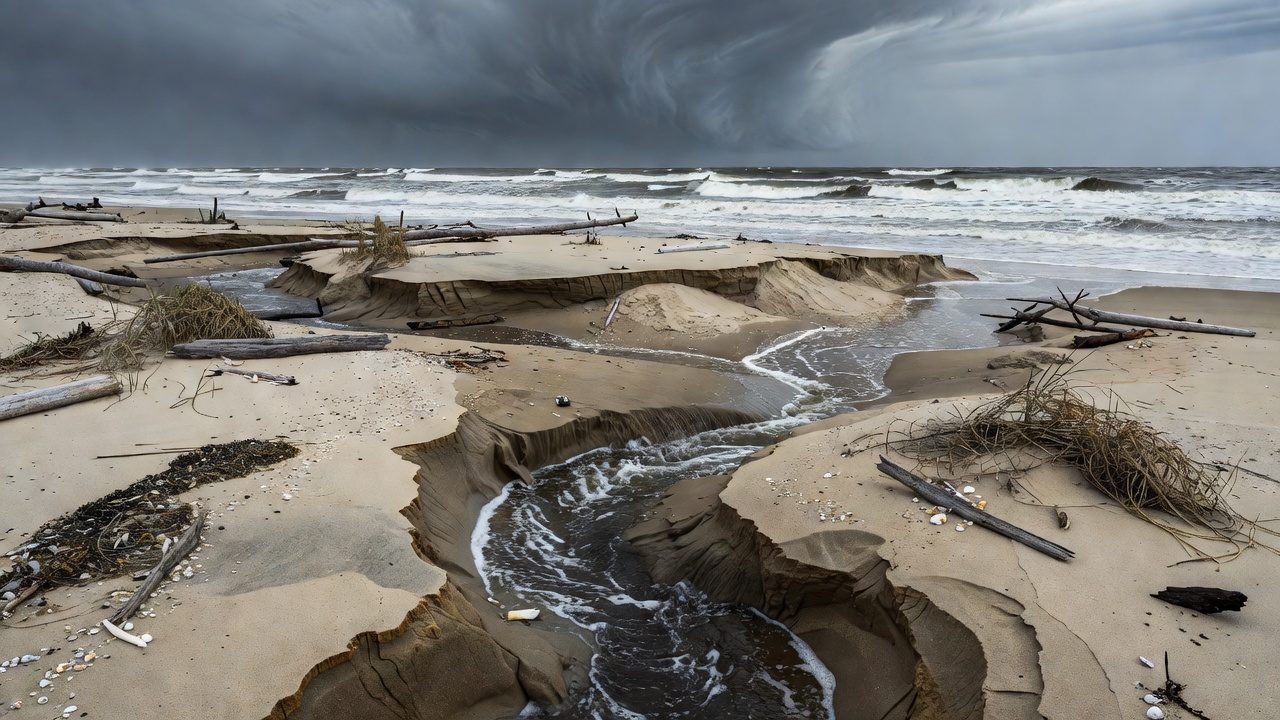
Recent hurricane activity along the Atlantic coast has significantly altered sandbar configurations, with storms redistributing sediment and modifying nearshore bathymetry. Observations from multiple sites indicate that high-energy wave action during landfall events erodes existing bars while depositing material in new locations, leading to shifts in both elevation and position.
Storm-Driven Sediment Transport
During major hurricanes, sustained winds generate waves exceeding 10 meters, which mobilize sand from beaches and dunes into the surf zone. This process often results in the formation of offshore bars that migrate seaward by tens of meters within days. Data collected post-storm show increased bar volumes in some areas offset by losses elsewhere, reflecting the net transport of sediment alongshore. Such changes affect wave breaking patterns and can influence subsequent coastal erosion rates during calmer periods.
Researchers monitoring sites from North Carolina to Florida have documented how category 3 and higher storms accelerate these dynamics. For instance, asymmetric wave fields during a hurricane's approach can cause preferential erosion on the northern flanks of sandbars while accretion occurs to the south. These patterns align with numerical models predicting sediment budgets under extreme forcing, though field measurements reveal greater variability than simulations alone suggest.
Long-Term Implications for Coastal Morphology
Repeated hurricane impacts compound over seasons, potentially leading to persistent reconfiguration of sandbar systems. Bars that once stabilized shorelines may diminish, exposing coasts to higher wave energy and accelerating beach retreat. Conversely, new bar formations can provide temporary buffers, altering local hydrodynamics for months or years afterward. Monitoring programs emphasize the need for updated surveys to track these evolving features accurately.
Overall, Atlantic sandbars demonstrate resilience through natural recovery processes between storms, yet the frequency of intense hurricanes may outpace equilibrium restoration. Continued observation remains essential for understanding these interactions and their role in broader coastal sediment dynamics.