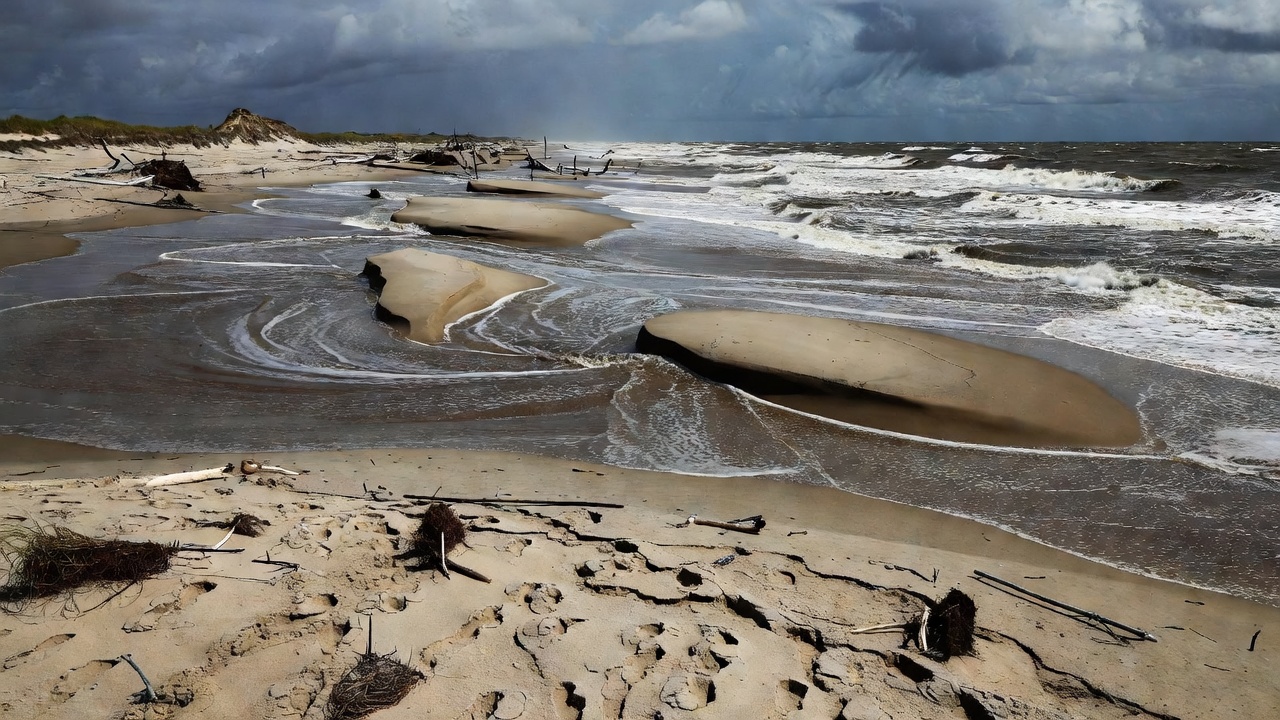
Recent Atlantic hurricane seasons have driven substantial changes to nearshore sandbar systems through intense wave action and sediment redistribution. Storms such as those in 2022 and 2023 generated elevated water levels that mobilized beach and bar material, altering both the position and volume of these features along the eastern seaboard.
Storm-Driven Sediment Transport
High-energy waves during landfall events transport sand offshore and alongshore at accelerated rates. Post-storm surveys indicate seaward migration of sandbars by 30 to 60 meters in multiple locations from North Carolina to Florida. Longshore currents further modify bar alignment, creating breaches or welding bars to the beach in other segments. These shifts occur rapidly, often within hours of peak storm surge, and can persist for months before wave conditions allow partial recovery.
Sediment budgets calculated after major events reveal net losses from the subaerial beach matched by gains in the nearshore bar field. This redistribution reduces immediate coastal flooding risk in some areas while exposing others to accelerated erosion during subsequent storms. Bathymetric data collected by federal agencies confirm that bar crests have lowered by an average of 0.8 meters in heavily impacted zones.
Long-Term Coastal Resilience Impacts
Altered sandbar morphology affects wave dissipation and sediment supply to downdrift beaches. When protective bars are flattened or displaced, shorelines experience greater wave energy during routine conditions, accelerating chronic erosion. Coastal managers now incorporate updated bar-position models into nourishment planning to account for these storm-induced deficits.
Remote sensing and repeat lidar flights show that recovery trajectories vary with storm frequency and background wave climate. Regions experiencing clustered hurricane activity exhibit slower bar rebuilding, leaving communities more exposed. Ongoing monitoring programs track these changes to refine forecasts of future sandbar configurations under increasing tropical cyclone intensity.