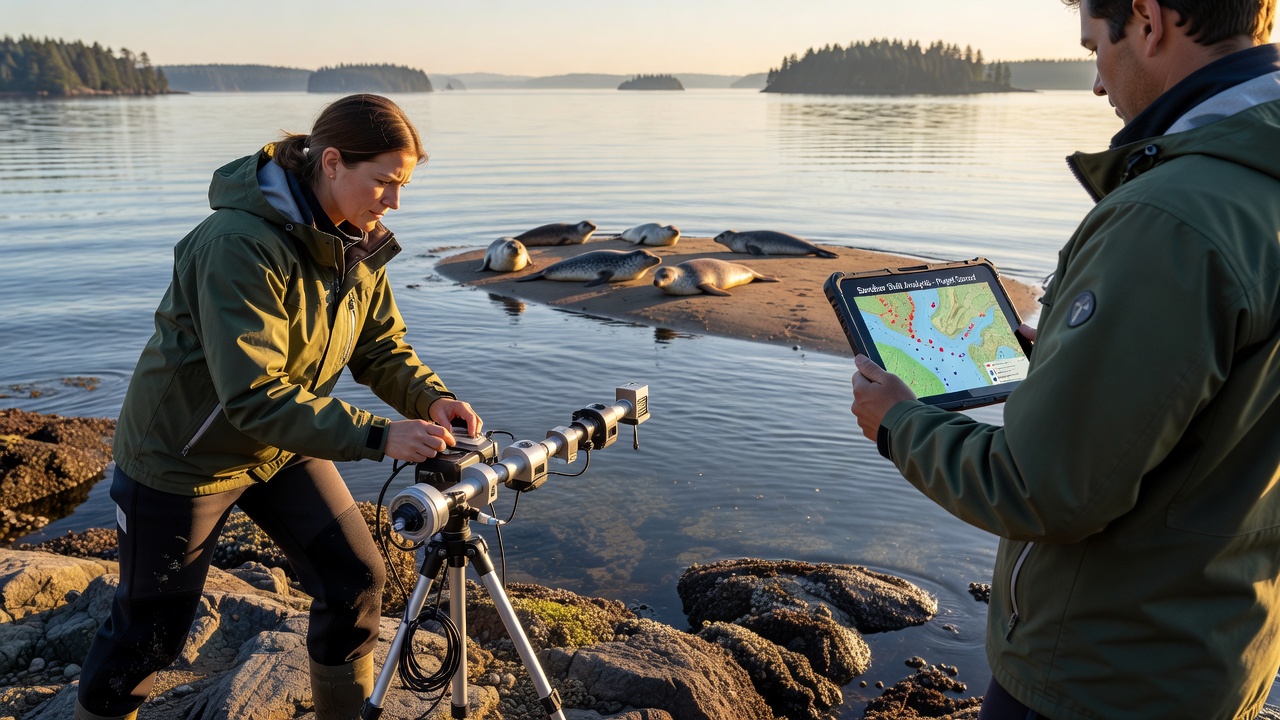
Acoustic Tools Track Sandbar Movements That Influence Harbor Seal Resting Areas in Puget Sound Inlets
Biologists have turned to acoustic sensors to follow sandbar movements that change the availability of resting spots for harbor seals throughout Puget Sound inlets, and the approach combines sound wave analysis with traditional field observations to build detailed maps of underwater sediment changes. Research teams place hydrophones along inlet floors where seals gather, then record vibrations created when sand shifts during tidal cycles or storm events. Those recordings help scientists measure how quickly bars grow, shrink, or migrate, which directly affects the dry areas seals need for hauling out and resting.
How Acoustic Sensors Capture Sediment Activity
Acoustic devices send pulses through the water column and listen for returning echoes that reveal sand particle movement at various depths, while arrays positioned at multiple depths allow researchers to separate surface waves from deeper sediment transport. Data collected in this manner shows that certain inlets experience bar migration rates of several meters per month during peak winter flows, and the same sensors detect subtle changes that visual surveys often miss because the activity occurs below the surface. Teams calibrate the equipment against sediment samples taken by divers so the acoustic signatures match actual grain sizes and movement patterns observed on site.
One project running through November 2026 focuses on three inlets where seal counts have fluctuated in recent years, and the sensors operate continuously to capture both gradual shifts and sudden changes after heavy rainfall. The continuous record lets biologists compare seal presence data with sandbar locations on a daily basis rather than relying on monthly aerial photos alone.
Connections Between Sandbar Locations and Seal Behavior
Harbor seals select haul-out sites based on proximity to feeding grounds and protection from predators, yet shifting sandbars can expose or submerge those sites within a single tidal cycle. When bars move closer to shore, new resting platforms appear while older ones disappear, forcing seals to relocate and sometimes increasing crowding at remaining locations. Acoustic records combined with GPS-tagged seal movements show that animals adjust their routes within hours of a bar change, and the data also indicate that pups born on more stable bars have higher survival rates during the first weeks after birth.
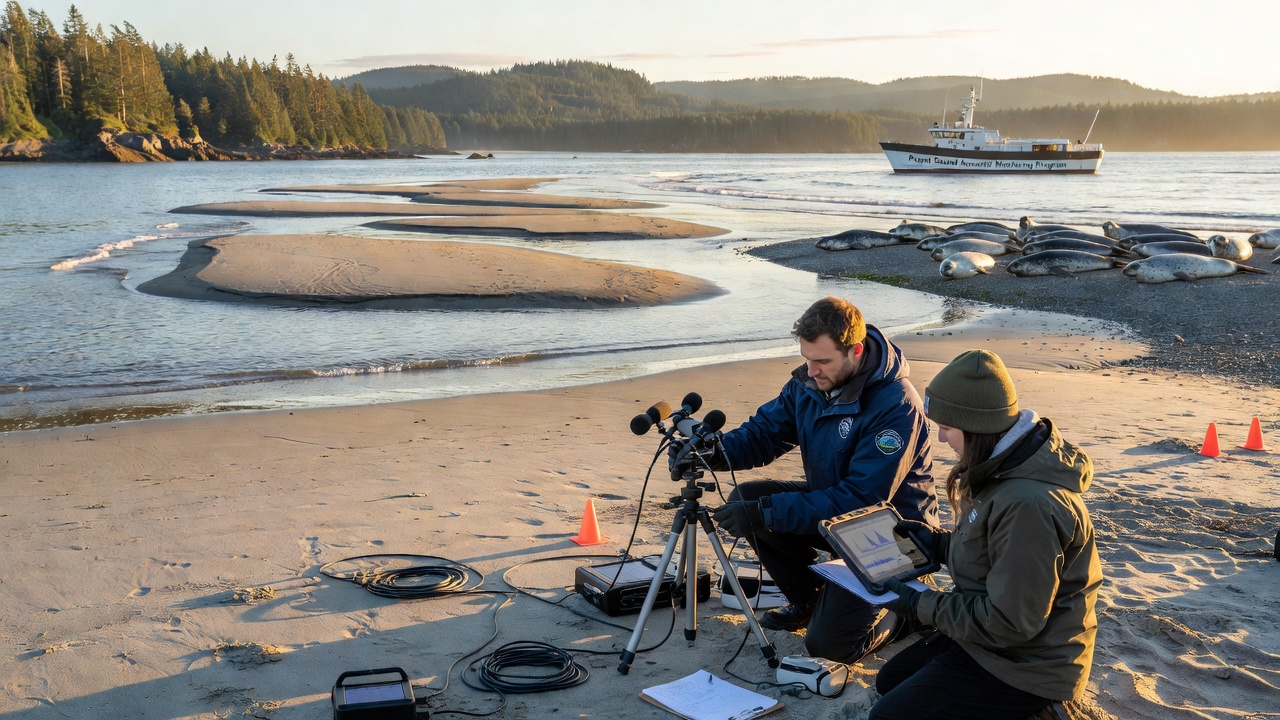
Studies coordinated across multiple agencies reveal that inlet geometry plays a major role in how sand responds to currents, and narrower passages experience faster bar movement than wider bays. Researchers note that acoustic data collected during calm periods still registers small daily adjustments caused by boat wakes, which accumulate over time and alter the overall shape of resting areas. This information helps managers predict which haul-out sites will remain usable through the next season and which may require temporary protection measures.
Integration with Broader Monitoring Programs
Acoustic monitoring fits into larger efforts that already track water temperature, salinity, and prey availability, creating a more complete picture of conditions that influence seal populations. Data from these combined systems feed into models used by state wildlife agencies and the National Oceanic and Atmospheric Administration to forecast habitat changes. NOAA Fisheries reports document how sediment dynamics affect marine mammal distribution across the Pacific Northwest, while parallel work by Fisheries and Oceans Canada provides comparative data from adjacent waters that share similar inlet characteristics. The two datasets together allow scientists to test whether patterns observed in Puget Sound appear in other coastal regions with comparable tidal ranges.
Training programs now teach field crews how to deploy and maintain the sensor arrays so that data quality remains consistent across seasons, and software developed for real-time analysis flags unusual sediment events that warrant immediate follow-up dives. Those flagged events often coincide with construction projects or extreme weather that accelerate bar movement beyond normal rates.
Conclusion
Acoustic monitoring continues to supply precise measurements of sandbar dynamics that directly influence harbor seal haul-out availability in Puget Sound inlets, and the resulting datasets support both scientific understanding and practical management decisions. Continued operation of the sensor networks through late 2026 will add further records that refine predictions about future habitat shifts and help maintain stable resting areas for the seals that depend on them.